Given the environmental limitations of plastic packaging and changing European regulations, manufacturers must develop more sustainable solutions without compromising on performance, safety, or functionality.
Natural, renewable, and recyclable, cellulose is a promising alternative. However, its use in packaging presents several challenges, including: improving its barrier properties against water, fats, and gases; enabling three-dimensional shaping through the deformation of a 2D matrix or the creation of innovative, low-density objects such as foams; ensuring its sealability; and managing its end-of-life.
The Cellulose Valley Chair provides a concrete solution to these challenges by bringing together research, education, and industry to develop high-performance, recyclable, and industrially viable cellulose-based packaging materials.
Cellulosic materials designed to meet packaging requirements
The Cellulose Valley Chair draws on the expertise of the LGP2 laboratory and Grenoble INP – Pagora, UGA to explore and optimize the properties of cellulose.
His work focuses in particular on:
- Advanced cellulosic materials: microfibrils, functionalized cellulose, paper, cardboard, foams, and biocomposites
- improved barrier properties against water, fats, oxygen, and water vapor
- the design of multilayer, functional, and smart structures
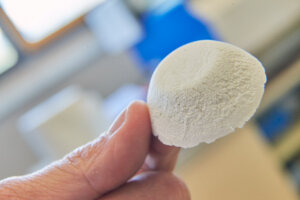
- the three-dimensional shaping of cellulosic materials with specific properties, such as low density
- the addition of properties through printing techniques, such as mechanical reinforcement
- the development of high-performance, low-carbon industrial processes
This approach makes it possible to design solutions that meet the requirements for recyclability, food contact safety, and performance expected by manufacturers.
From Prototype to Industrial Demonstrator
Working closely with its partners, the chair transforms scientific advances into practical applications through theses, research projects, and proofs of concept.
This approach makes it possible to quickly compare research results with industrial realities, assess their technical feasibility, and prepare for their transfer to companies. The work conducted within the chair thus promotes the technological maturation of the solutions developed, from initial concepts to industrial demonstrators.
The 2026–2030 program aims to build on this momentum by accelerating the transition to full-scale production, developing more efficient processes, and supporting manufacturers as they navigate the new environmental and regulatory requirements in the packaging sector.
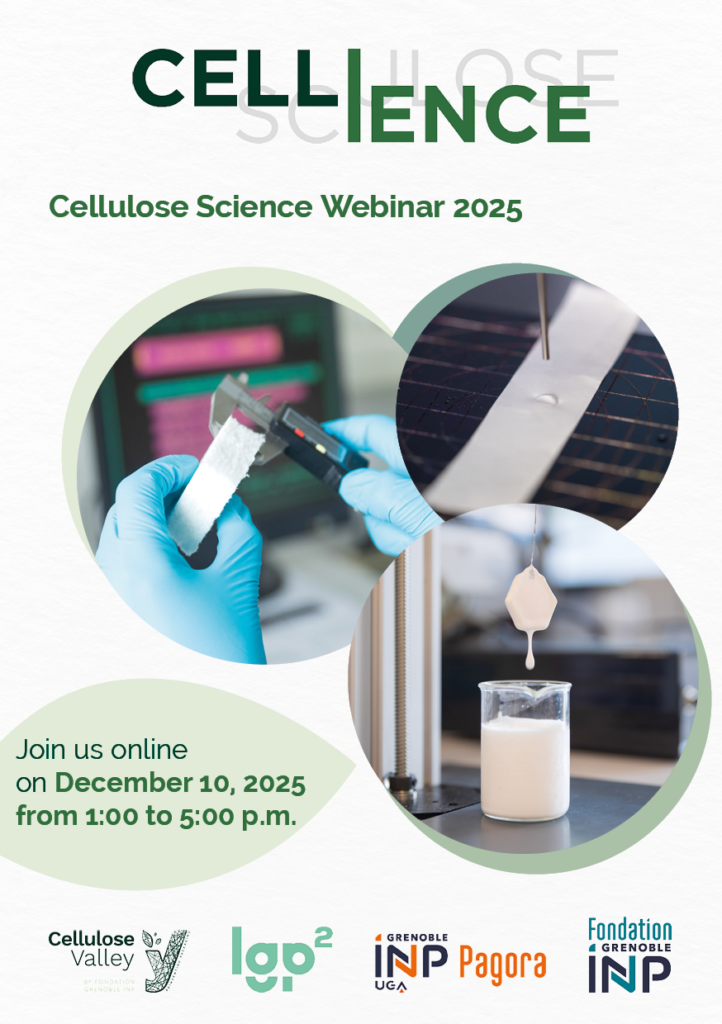
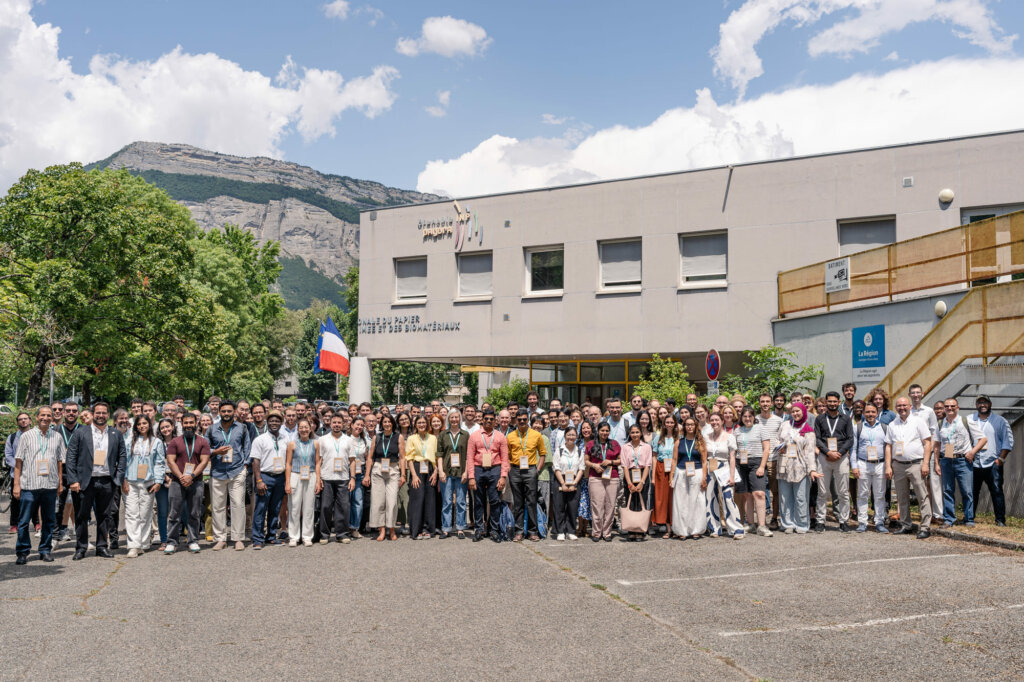
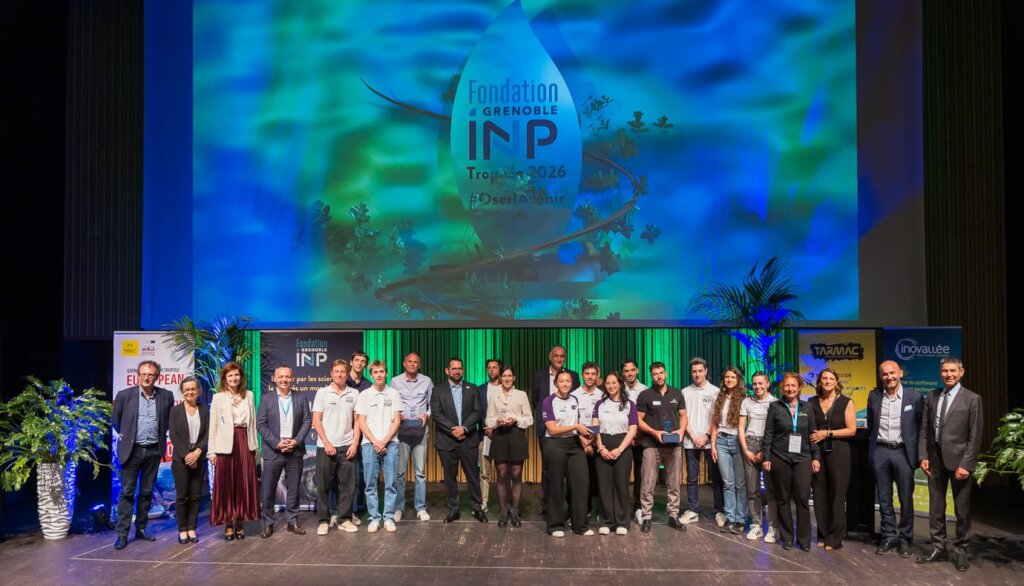
The chair also contributes to knowledge sharing through conferences, international webinars, thematic workshops, student competitions, and scientific events that bring together researchers, students, and industry professionals to address the challenges of sustainable packaging.
Collaboration Across the Entire Packaging Value Chain
The Cellulose Valley Chair brings together an ecosystem comprising:
- Process Engineering Laboratory for Biorefineries, Bio-based Materials, and Functional Printing (LGP2 laboratory)
- Grenoble INP – Pagora, UGA, International School of Paper, Print Media, and Biomaterials
- The founding sponsors, who have been supporting the chair since 2022: Ahlstrom, Groupe Guillin (Alphaform), Aptar, Chanel Parfums Beauté, Citeo and DS Smith
- Partners who have joined the 2026–2030 program: ANDRITZ, Centre Technique du Papier (CTP), Fibre Excellence
This structure makes it possible to align research with on-the-ground needs, foster collaboration among the various links in the supply chain, and accelerate the translation of scientific findings into practical applications.
A catalyst for environmental and industrial transition
By developing high-performance alternatives to packaging made from fossil resources, the Cellulose Valley Chair directly contributes to:
- reducing the use of plastics in packaging
- improving the recyclability of materials
- the design of bio-based and low-carbon solutions
- how companies are adapting to changes in European regulations
- the development of skills among future engineers and researchers
- the transfer of scientific innovations into concrete industrial applications
The chair also reinforces the excellence of Grenoble INP – UGA in the field of bio-based materials and contributes to the international recognition of its expertise in cellulose.






Selected Works
Publications