Medelia Chair

Applied Research for the Sustainability and Safety of Hydraulic Structures

Extending the Service Life of Hydromechanical Structures Through Innovative Research

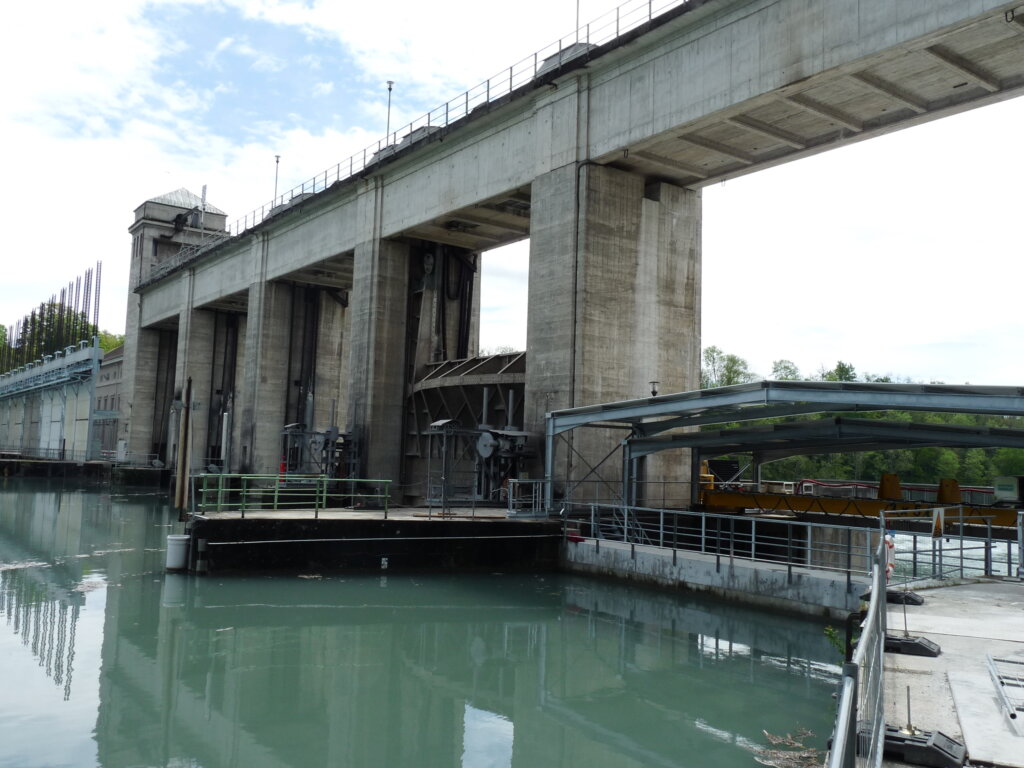
The aging of hydraulic structures is a major challenge in France and around the world. Dams, hydroelectric power plants, and hydromechanical equipment now require strategic decisions regarding whether to extend their service life, repair them, reinforce them, or replace them.

These choices involve significant costs and require a precise assessment of the risks of failure and the remaining service life of the structures.

The Medelia Chair provides a concrete response to these challenges by conducting applied research in structural mechanics and the reliability of hydraulic structures, serving the needs of the hydraulic engineering industry.


An Advanced Scientific Approach to Structural Fatigue Analysis

The Medelia Chair focuses on the study of mechanical fatigue in metal structures, particularly gate systems in dams and hydroelectric power plants.

Its work is based on a dual, complementary approach:

  • Probabilistic approach : integration of uncertainties related to materials, loads, and operating conditions to anticipate risks
  • Deterministic approach : precise analysis of the mechanical behavior of structures

This combination improves the reliability of fatigue calculation models and provides robust estimates of the residual service life of structures.


Decision-Support Tools for Infrastructure Managers

By combining research data with feedback from industry professionals, the Medelia Chair develops:

  • ‎‎‎‎‎‎' predictive models for the service life of structures
  • ‎‎‎‎‎‎' failure risk assessments
  • ‎‎‎‎‎‎' decision-support tools for the maintenance of hydraulic structures

These tools enable operators to optimize their maintenance strategies (monitoring, repair, replacement) while ensuring the safety and performance of the facilities.


A collaboration between research, industry, and education

The Medelia Chair is based on a collaborative model that brings together:

This initiative promotes knowledge transfer, technological innovation, and the training of future engineers and experts in the hydropower sector.


A catalyst for the energy transition and infrastructure security

By contributing to the the sustainability of water infrastructure, the Medelia Chair plays a direct role in addressing the following challenges:

  • energy transition
  • structural and regional safety
  • optimization of hydroelectric plant performance

It is fully aligned with an approach to applied science focusedon concrete applications and measurable impacts for industry and society.


Our missions

“The Medelia Chair further strengthens our long-standing ties with Grenoble INP–UGA in the field of hydraulic structure maintenance. SPRETEC, a subsidiary of the Artelia Group, specializes in mechanical engineering applied to movable structures on waterways, dams, and port facilities. This chair provides an opportunity to forge a new partnership and make progress, with the support of research laboratories, on the durability of hydromechanical structures in the context of climate change. For us, it represents a stimulating environment for the exchange of knowledge between the Artelia Group and the academic community, with the participation of experts from operators and companies in the sector.”
Frédéric Debieuvre

Frédéric DEBIEUVRE

Managing Director - SPRETEC – Artelia Group, Chair of the Medelia Chair Steering Committee
“According to current regulations, the models used make it possible, for example, to verify at every point in the structure that the material's strength exceeds the applied load, but without clearly taking into account the variability of materials and loads, or any defects or other effects of aging present in the structure.”
Julien Baroth

Julien BAROTH

Holder of the Medelia Chair, Researcher at 3SR
“SPRETEC turned to us because we have advanced calculation methods and access to descriptive data and case studies in the scientific literature—something that is particularly rare and valuable for civil engineering structures. We will assist SPRETEC by, for example, gathering data and test results from laboratories around the world, and by using probabilistic methods based not on fixed values, but on mean values, standard deviations, or even distributions estimated based on other studies.”
Rafael Estevez

Rafaël ESTEVEZ

Holder of the Medelia Chair, Researcher at SIMaP
  • Improving the safety and sustainability of hydraulic structures
  • To develop reliable methods for estimating service life
  • Designing decision-support tools for operators
  • Training the experts and engineers of tomorrow
  • Structural and Infrastructure Reliability
  • Fracture Mechanics
  • Probabilistic Fatigue Analysis
  • Numerical Methods (Stochastic Finite Elements)
  • Standards and Specifications (Eurocode 3)

Soutenir une action d'entrepreneuriat de transition

A travers le programme MyFondation, les entreprises peuvent s’engager concrètement auprès des étudiants, renforcer l’attractivité économique de leur territoire tout en affirmant leur responsabilité sociale.en finançant des bourses ou des projets associatif d’étudiants.